


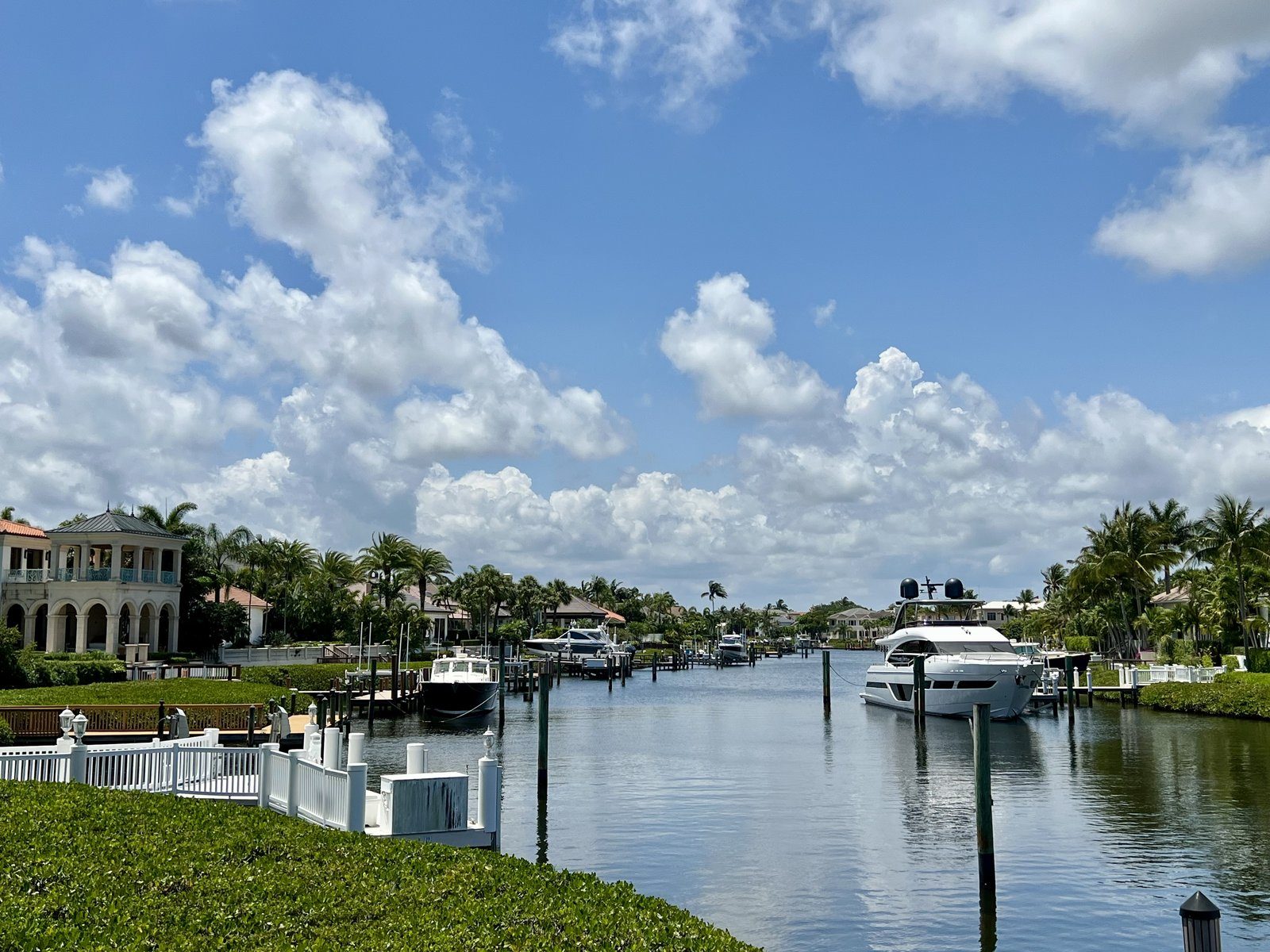
Every home sits in a FEMA flood zone, and the zone decides whether your lender requires flood insurance. Look up the zone before you offer, ask the seller for an elevation certificate and the current policy, and get a flood quote from an insurance agent while you still have time to change your mind.
What is a flood zone?
A flood zone is a label on a FEMA flood map that describes how likely the ground is to flood. FEMA's glossary defines the high-risk area, called the Special Flood Hazard Area, as the land that would be flooded by an event with a 1 percent chance of occurring in any given year. That event is also called the base flood or the 100-year flood.
The map groups land into three levels of risk. The letters tell you which level a property sits in, and the level decides what a lender asks for. Palm Beach County's flood page says every county resident lives in a flood zone, so the question for a buyer is which one.
| Zone | What FEMA says it means |
|---|---|
| Zone A, AE and other A zones | High risk. Inside the Special Flood Hazard Area. AE zones also show a base flood elevation. |
| Zone V and VE | High risk, along the coast. Also inside the Special Flood Hazard Area. |
| Zone X (shaded) or Zone B | Moderate risk. Between the limits of the 1 percent flood and the 0.2 percent flood. |
| Zone X (unshaded) or Zone C | Minimal risk. Outside the high-risk area and above the 0.2 percent flood. |
Source: FEMA glossary, Flood Zones (last updated 8 July 2020), read 17 November 2026. Zone labels on a map can change when FEMA issues new maps.
The maps do change. Palm Beach County reports that FEMA's updated maps took effect on 20 December 2024 and that thousands more residents in the eastern part of the county moved into high-risk zones. The county says more than 16,000 parcels saw the base flood elevation rise by one foot or more (county update on flood zones, read 17 November 2026). Do not rely on a zone you remember from an older listing or a past owner's policy.
How do you find a home's flood zone?
Start with FEMA's Flood Map Service Center, where you can search an address and see the effective map. Palm Beach County also runs its own lookup tool, and its building division lists a flood zone hotline and an email address for questions (county flood information).
The county says its online tools are a public service and can change, and that flood information should be confirmed with an official determination before you buy or build. Ask your lender for its official flood zone determination, because that is the version the loan relies on.
What is an elevation certificate?
An elevation certificate is an official record of a building's elevation compared with the flood map. FEMA's glossary entry explains that communities keep this record to show that new buildings and major improvements in the high-risk area were built high enough, and that the same form can be used by the owner to get flood insurance.
For a buyer, it shows how high the lowest floor sits and how that height compares with the base flood elevation, which is the number that matters most when the map changes. The county's flood page tells owners to check both their flood zone and any available elevation certificates.
Ask the seller for a copy before you make an offer, and ask who prepared it and when. If none exists, ask your insurance agent whether a new one would help the quote, and who should order it during your inspection period.
Does a lender require flood insurance?
In the high-risk area, usually yes. FEMA states that flood insurance is required for most loans on properties in the Special Flood Hazard Area, and that most lenders require the buyer to purchase it before the sale closes (FEMA guidance for real estate and lending professionals, read 17 November 2026).
In moderate and low risk areas, Zone X, no federal rule requires you to buy it, but FEMA notes that a lender can still require it. A cash buyer faces no lender requirement at all, but the risk is the same, so the decision is still yours to make with an agent.
| Situation | What applies |
|---|---|
| High-risk zone (A or V) with a mortgage | Required for most loans, per FEMA |
| Zone X with a mortgage | No federal requirement, but a lender can require it |
| Any zone, cash purchase | No lender requirement. You decide |
| Condo unit or townhome | Ask the association what its policy covers and what you must buy yourself |
Standard home insurance does not cover flood damage, the county's flood page says, so a flood policy is a separate purchase. FEMA reports that more than 20 percent of all flood claims come from moderate or low risk Zone X, which is why many buyers outside the high-risk area still ask for a quote.
What changes the premium?
FEMA's pricing method for the National Flood Insurance Program, called Risk Rating 2.0, has been fully in use since 1 April 2023. FEMA says it prices each home using more than the zone letter. The variables include flood frequency, several types of flooding, distance to a water source, the home's elevation and the cost to rebuild (NFIP's pricing approach, read 17 November 2026).
That is why two homes on the same canal can carry different premiums: their elevation, distance to the water and rebuild cost can differ even when the zone letter is the same. Private insurers price their own policies and may quote differently, so compare more than one.
FEMA reports two limits that help a new owner plan. Existing statutory limits mean most rates cannot rise more than 18 percent a year. Communities in the Community Rating System can earn NFIP discounts of 5 to 45 percent, and FEMA says the discount applies to every policy in a participating community. Ask your agent whether the town where you are buying takes part.
FEMA also says a policyholder can transfer an eligible discount to a new owner by assigning the flood policy when the property is sold. Ask the seller's agent whether the current policy can be assigned and what it costs today.
What should you ask the seller and the insurance agent?
Ask early, because an answer you receive after the inspection period ends is worth less. A flood quote takes an agent a short time, and it tells you the real monthly cost of the home before you commit to it.
| Question | Who can answer it |
|---|---|
| What is the flood zone on the current map? | FEMA's Flood Map Service Center, then your lender's determination |
| Is there an elevation certificate, and how recent is it? | The seller, or a licensed surveyor |
| Does the home have a flood policy, and can it be assigned? | The seller and the seller's insurance agent |
| What would a new policy cost for this address? | An insurance agent, with quotes from more than one source |
| Were there flood claims or repairs on this home? | The seller's disclosure and the insurance history |
| Will plans for major work meet current elevation rules? | The town or county building department |
- 01Look up the zoneSearch the address on FEMA's map tool and the county's lookup.
- 02Get the paperworkAsk for the elevation certificate and the current flood policy.
- 03Ask for quotesHave an insurance agent price the home before your inspection period ends.
- 04Check with your lenderConfirm in writing whether a flood policy is required to close.
Who is behind this guide

Jack and Jill Team works with eXp Realty in South Florida and South Jersey. Jack Zaborowski is a Florida broker (license BK3442133) and a New Jersey broker-salesperson (license 0338769), licensed since 2003, and holds the CLHMS and RSPS designations. Jill Perry-Zaborowski is a principal sales associate in Florida and New Jersey.
We are real estate agents, not insurance agents or surveyors. The flood rules come from FEMA and Palm Beach County, linked above. Read more about the team.
Questions buyers ask
How do I find a home's flood zone?
Search the address in FEMA's Flood Map Service Center, then check the county's lookup tool or ask its flood zone hotline. Ask your lender for its official flood zone determination, because the loan relies on that version. Maps changed in December 2024, so do not use an older zone.
What does an elevation certificate show?
It is an official record of how high a building's lowest floor sits compared with the flood map. FEMA says owners can use it to get flood insurance. Ask the seller for a copy, and ask an insurance agent whether a new one could help.
Is flood insurance required in Jupiter?
It depends on the zone and the loan. FEMA says flood insurance is required for most loans on homes inside the high-risk area, and that most lenders ask for it before closing. In Zone X it is not federally required, but a lender can ask for it.
Does a home outside the high-risk zone need coverage?
Not by federal rule, but many owners buy it anyway. FEMA reports that more than 20 percent of all flood claims come from moderate or low hazard Zone X. Standard home insurance does not cover flood damage, so ask an agent for a quote and decide with the number in hand.
Can the seller pass on their flood policy?
Sometimes. FEMA says a policyholder can transfer an eligible discount to a new owner by assigning the flood policy when the property changes hands. Ask the seller's agent whether this policy qualifies, what it costs now, and how it compares with a fresh quote for the same address.
Keep reading
Comparing waterfront homes in Jupiter and Tequesta?
Tell Jack and Jill which homes you like. They will help you line up the zone check, the elevation certificate and the insurance quote before you make an offer.
Prefer to talk it through? Call 561-660-2352 for South Florida or 609-602-7140 for South Jersey.
This guide is general information, not insurance, engineering or legal advice. We are real estate agents, not insurance agents or surveyors. Flood maps, premiums and rules change, so confirm them with FEMA, Palm Beach County, your lender and a licensed insurance agent before you buy.