


After a sale, Palm Beach County reassesses the home at market value on the next 1 January, so the seller's bill is no guide to yours. Own and live in the home on 1 January, then apply for homestead by 1 March. Amendment 3, approved this month, changes the exemption from 2027.
Does the tax bill reset when you buy?
Yes, the assessed value resets. Florida law says a homestead property is assessed at just value, which is market value, as of 1 January of the year after a change of ownership. The same rule applies to other residential property, and the text sits in section 193.155 and section 193.1554 of the Florida Statutes.
That is why a seller's bill is a poor guide. A seller who has owned a home for fifteen years may be paying tax on an assessed value far below what you paid. Your first full bill is built on the new value, and a recent sale price is strong evidence of it.
Timing adds a wrinkle. The bill that arrives in the year you buy is based on the property's status on 1 January, which was the seller's. Ask your closing agent how the year's taxes are prorated, because taxes are billed in arrears.
What does the homestead exemption cover?
A homestead exemption lowers the taxable value of your permanent residence. The Palm Beach County Property Appraiser describes it on its homestead exemption page, and the statute is section 196.031. The rules below are today's, before Amendment 3 takes effect.
| Item | What applies |
|---|---|
| Who qualifies | A permanent Florida resident who holds title and makes the property a permanent residence on 1 January. |
| First exemption | $25,000 off the first $50,000 of assessed value. It applies to all taxes, including school district taxes. |
| Additional exemption | Applies when assessed value is at least $50,000 and rises with inflation. It does not apply to school taxes, and the appraiser gave $25,722 as the 2025 maximum. |
| How to apply | By 1 March of the year the benefit starts. File online, in person or by mail. Missing the deadline waives the exemption for that year. |
| What you bring | Social Security numbers, a Florida driver's license or ID, and proof of permanent residency such as a vehicle or voter registration or a federal tax return. |
| Renewal | Once approved, it renews automatically while you continue to qualify. You must report changes. |
The appraiser's own estimate is that a homestead exemption saves generally $750 to $1,000 a year. Your figure depends on the tax rates in your taxing districts, which are set locally each year.
What is the Save Our Homes cap?
Once a property has a homestead exemption, its assessed value can rise each year by no more than 3 percent or the change in the Consumer Price Index, whichever is lower. The rule is in section 193.155. Market value can climb faster, and the gap between the two is the benefit that builds up over the years.
Property without a homestead exemption, such as a second home or a rental, has its own cap. Section 193.1554 limits increases in assessed value for non-school taxes to 10 percent a year, and Amendment 3 lowers that to 5 percent from 2027.
What is portability?
Portability lets you carry some of your accumulated cap savings to a new Florida home, up to $500,000. The Property Appraiser's portability page and section 193.155 set the rules. You must have had a homestead exemption in one of the three years before, and you must establish the new home on or before 1 January of the third year after you leave the old one.
You apply by 1 March, together with your homestead application on the new property. If you buy a more expensive home, the transfer is the difference between your old home's market value and assessed value, up to the limit. For a less expensive home, you transfer a proportion of it.
Portability applies to a move from one Florida homestead to another. A buyer coming from New Jersey does not have a Florida cap to carry over.
What does Amendment 3 change?
Florida voters approved Amendment 3 on 3 November 2026 with about 62 percent of the vote, according to WUSF. The count is unofficial until the state canvassing commission certifies it. The Legislature wrote the measure as CS/HJR 1F, and its final House bill analysis is the source for the table below.
The Palm Beach County Property Appraiser told WPTV that the change does not touch 2026 bills and that current homestead owners need not reapply. The higher amounts first appear on the proposed tax notices sent in August 2027.
| Item | What the measure provides |
|---|---|
| Non-school homestead exemption | Applies to the first $150,000 of assessed value in 2027 and the first $250,000 from 2028. The $250,000 amount is indexed to inflation from 2029. |
| School taxes | The existing $25,000 exemption for school taxes stays as it is. |
| New Florida residents | Owners who were not permanent Florida residents on 31 December 2026 receive a smaller exemption for five years, then the full one. |
| Second homes and rentals | The yearly cap on assessed value growth for non-homestead property falls from 10 percent to 5 percent. |
| Still to come | The governor has said a special session is needed to spell out how it works, and the Property Appraiser says its guidance will update as details are finalized. |
For a buyer who is moving to Florida, the newcomer rule matters most. Because the cutoff is residency on 31 December 2026, when you move can change which exemption you get. Ask the Property Appraiser how it will apply the rule to your case, and ask your tax adviser about it before you close.
To size the effect, remember that a mill is $1 per $1,000 of taxable value. Each extra $100,000 of exemption saves $100 for every mill of non-school tax rate in your taxing districts. The rate is set locally and may change as governments adjust to the measure.
Sources: Florida Statutes sections 196.031, 193.155 and 193.1554 (2026 edition), Palm Beach County Property Appraiser pages, Florida House final bill analysis of CS/HJR 1F, WPTV and WUSF, read 14 November 2026. Amendment 3 results are unofficial until certified, and implementing rules may change.
When do you pay, and how do you estimate it?
Tax bills go out in November for the calendar year. Section 197.162 sets the early payment discounts: 4 percent in November, 3 percent in December, 2 percent in January and 1 percent in February, with none in March.
To estimate your own bill, use the Property Tax Calculator on the Property Appraiser's site. Enter the price you expect to pay, then compare the result with the seller's current bill so you can see how large the reset will be. Add your insurance and association costs to see the full monthly picture.
- 01Before you offerLook up the home's current assessed value and taxes, and run the calculator at your price.
- 02At closingConfirm how the year's taxes are prorated between you and the seller.
- 03By 1 March after you buyFile your homestead application, with portability if you qualify.
- 04In AugustCheck the proposed tax notice and challenge the value if it looks wrong.
Who is behind this guide
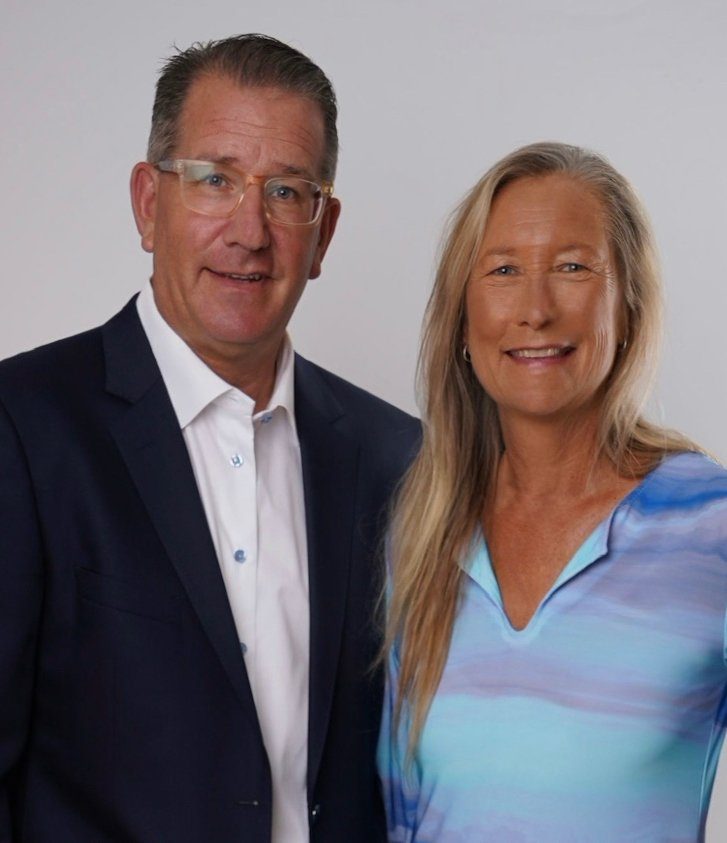
Jack and Jill Team works with eXp Realty in South Florida and South Jersey. Jack Zaborowski is a Florida broker (license BK3442133) and a New Jersey broker-salesperson (license 0338769), licensed since 2003, and holds the CLHMS and RSPS designations. Jill Perry-Zaborowski is a principal sales associate in Florida and New Jersey.
We are real estate agents, not tax advisers. The rules here come from the sources linked above. Read more about the team.
Questions buyers ask
Do property taxes go up when you buy a house in Florida?
Often yes. The property is reassessed at market value as of 1 January after the sale, so a long-time owner's capped value can reset upward. Your first full bill reflects that new value. Use the county appraiser's calculator at your expected price to see what to expect.
How do I apply for homestead in Palm Beach County?
Apply to the Palm Beach County Property Appraiser online, in person or by mail. You need Social Security numbers, a Florida driver's license or ID, and proof of permanent residency such as a vehicle or voter registration. You must own and live in the home on 1 January.
What is the deadline for the homestead exemption?
The deadline is 1 March of the year the exemption would apply, and missing it waives the exemption for that year. You must have owned the property and made it your permanent residence by the previous 1 January. Apply soon after you close.
Can I take my Save Our Homes cap with me to a new home?
Within Florida, yes, through portability. You can transfer up to $500,000 of accumulated savings if you had homestead in one of the last three years and establish the new home by 1 January of the third year after leaving. Apply by 1 March with your homestead application.
Do second-home owners get homestead?
No. Homestead is for a permanent residence you live in on 1 January. A second home is assessed as non-homestead property, with a yearly cap of 10 percent for non-school taxes that Amendment 3 lowers to 5 percent from 2027. Rental and second-home bills usually run higher than homestead.
Keep reading
Moving to Palm Beach County and unsure about taxes?
Tell us the town and price range. Jack and Jill will walk you through how the reset works for your purchase and point you to the Property Appraiser's calculator before you make an offer.
Prefer to talk it through? Call 561-660-2352 for South Florida or 609-602-7140 for South Jersey.
This guide is general information, not tax or legal advice. We are real estate agents, not tax advisers or attorneys. Tax rules change, and Amendment 3's details are still being finalized, so confirm your own situation with the Palm Beach County Property Appraiser and a tax professional.